

Starting an online community is easy. Keeping it alive is the hard part.
Most new groups follow the same story. A burst of excitement, a few welcome posts, then silence. Members drift away because nothing is happening, and nothing happens because members drifted away.
The good news is that active communities aren't luck. They follow a few simple strategies. Here are 9 online community building strategies for 2027 that turn a quiet group into a loyal following.
The 9 Strategies at a Glance
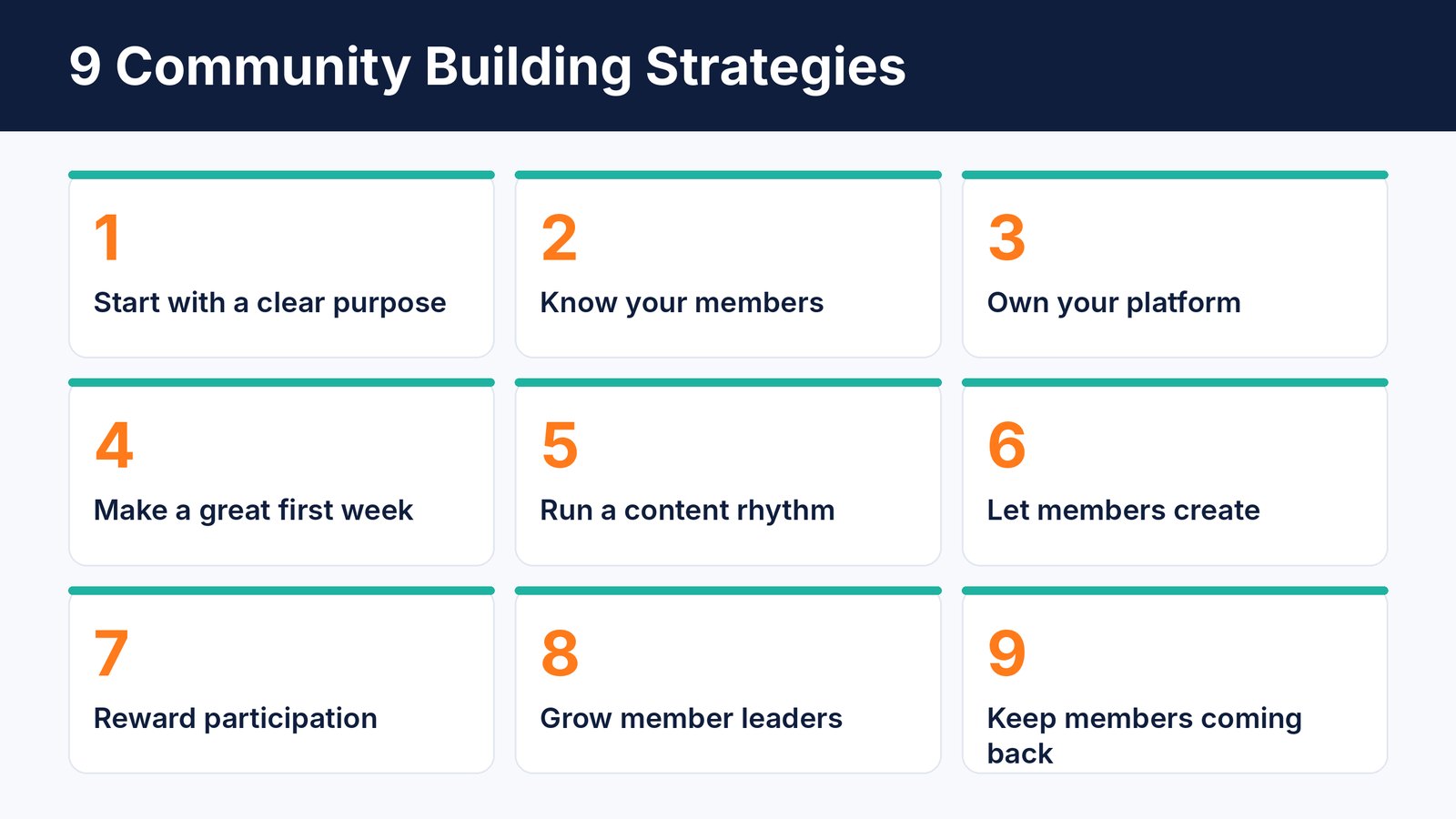
Here's the whole plan in one table. Each strategy is explained below, with simple steps you can start this week.
| # | Strategy | What it does |
|---|---|---|
| 1 | Start with a clear purpose | Tells people why the community exists |
| 2 | Know your members | Makes every post feel relevant |
| 3 | Own your platform | Protects you from algorithm changes |
| 4 | Make a great first week | Turns new joiners into regulars |
| 5 | Run a content rhythm | Gives people a reason to come back |
| 6 | Let members create | Spreads the work and builds pride |
| 7 | Reward participation | Makes contributing feel good |
| 8 | Grow member leaders | Helps the community run itself |
| 9 | Keep members coming back | Stops people quietly drifting away |
Why Online Communities Go Quiet
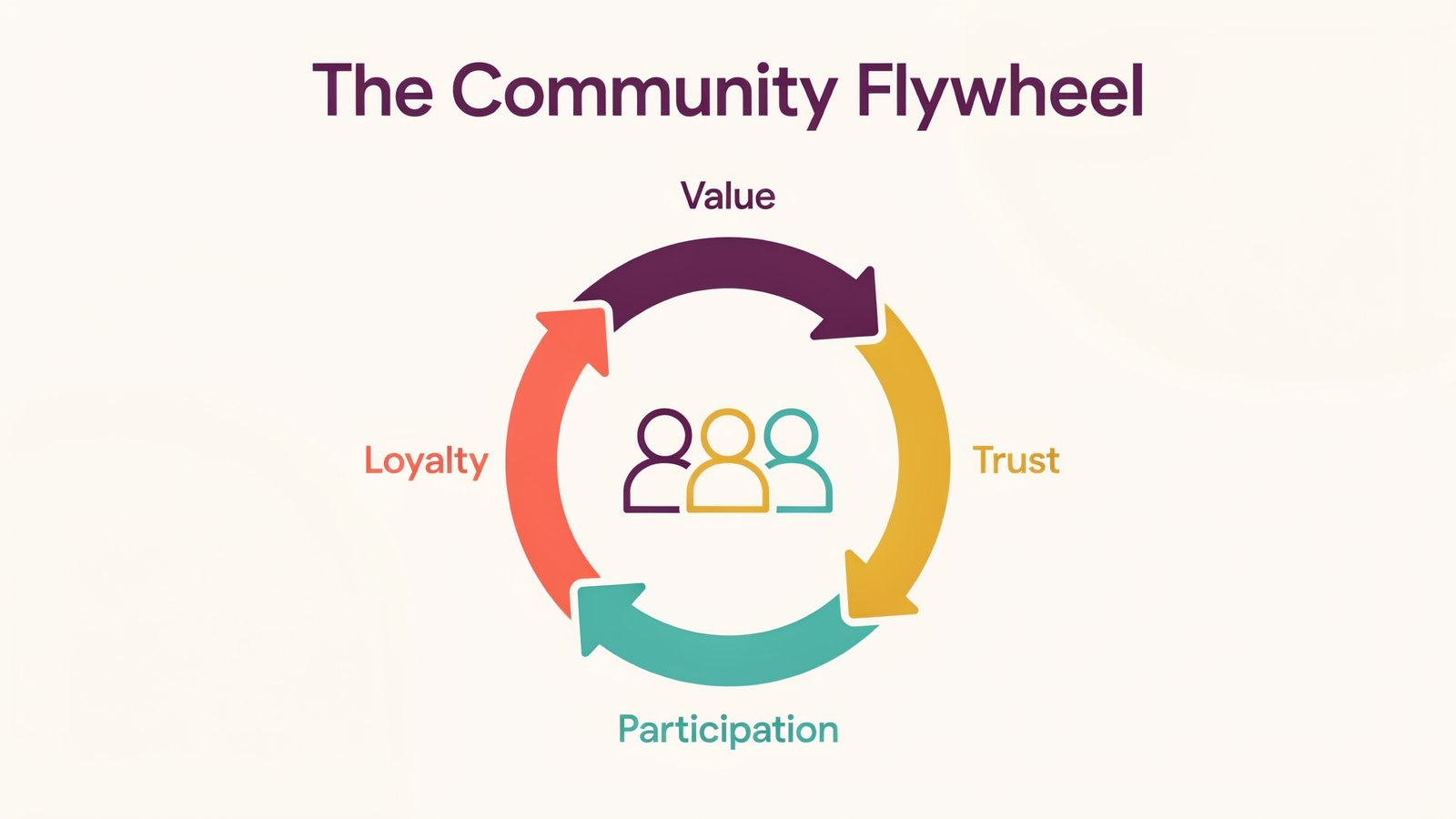
Every healthy community runs on a simple loop. Members get value, which builds trust. Trust makes them participate. Participation creates more value for everyone, and over time that becomes loyalty.
When the loop breaks, the community stalls. The most common breaks are easy to spot.
- No clear reason to be there. People join, look around and never return.
- An empty room. New members post once, get no reply and give up.
- Everything depends on the host. The founder burns out and the posts stop.
- No rhythm. Nobody knows when something new will happen.
Each strategy below fixes one of these breaks.
1. Start With a Clear Purpose
Before you invite anyone, decide what change your community will help people make. "A place for marketers" is vague. "Helping new freelancers land their first five clients" is a reason to join.
Why it works A clear purpose tells the right people they belong and gives every post a direction. It also makes your community easy to describe, which helps word of mouth.
How to do it
- Write one sentence that says who it's for and what they'll achieve.
- Put that sentence at the top of your community page.
- Turn it down when a post or idea doesn't fit. Focus is a feature.
Try this Ask three potential members to read your purpose sentence. If they can't repeat it back in their own words, simplify it.
2. Know Your Members
Don't guess what people want. Ask them. A short survey, a few calls or a welcome question can tell you more than any analytics dashboard.
Why it works When posts, events and topics match members' real problems, they feel seen, and people come back to places where they feel seen.
How to do it
- Ask every new member one question when they join, like their biggest challenge right now.
- Keep a simple list of the most common answers.
- Plan your next month of topics around the top three.
Try this Run a two-question poll every quarter. What's helping you most here, and what's missing?
3. Own Your Platform
Social media groups are easy to start, but the platform controls who sees your posts and can change the rules overnight.
Why it works On a platform you control, every member sees what you share, you keep your member list and you can charge for access without giving away a big cut.
How to do it
- Pick a dedicated community platform rather than relying only on social media groups.
- Check the fees, as some platforms take a share of every sale.
- Make sure it works well on phones, because that's where most members will be.
Try this Compare your options in our list of the 8 best online community platforms, or see the best Skool alternatives if you're weighing up Skool.
4. Make a Great First Week
The first few days decide whether a new member becomes a regular or a ghost.
Why it works A warm welcome and a quick win show new members that the community is alive and worth their time.
How to do it
- Greet every new member by name within a day.
- Give them one easy first action, like introducing themselves or answering a simple question.
- Point them to your best three posts or resources.
- Reply to their first post quickly, even with a short comment.
Try this Create a pinned "Start here" post with your purpose, the rules in plain words and three things to do first.
5. Run a Simple Content Rhythm
People come back to places where they know something will happen. A weekly rhythm turns random visits into a habit.
Why it works Regular, predictable posts and events give members a reason to check in, and they make planning far easier for you.
How to do it
- Pick two or three weekly rituals, like a Monday goals thread and a Friday wins thread.
- Hold one live session a month, such as a Q&A or a short workshop.
- Keep a simple calendar so posts go out even on busy weeks.
Try this Start with just one weekly thread. Once it's working, add the next.
6. Let Members Create
The strongest communities aren't run by one voice. Members share their own questions, wins, tips and resources.
Why it works When members create, the community grows richer without more work from you, and people feel proud of something they helped build.
How to do it
- Ask open questions that invite stories, not yes or no answers.
- Feature great member posts in a weekly roundup.
- Invite members to host a session on something they know well.
Try this Every week, thank one member publicly for a helpful post and explain why it helped.
7. Reward Participation
Small rewards make contributing feel good. They don't need to cost money.
Why it works Recognition, levels and small perks give members a visible sense of progress, which keeps them active.
How to do it
- Use badges, levels or points if your platform supports them.
- Unlock bonus content or events for active members.
- Celebrate milestones, like a member's first post or one year in the group.
Try this Keep rewards about helping others, not just posting more. You want quality, not noise.
The Member Journey
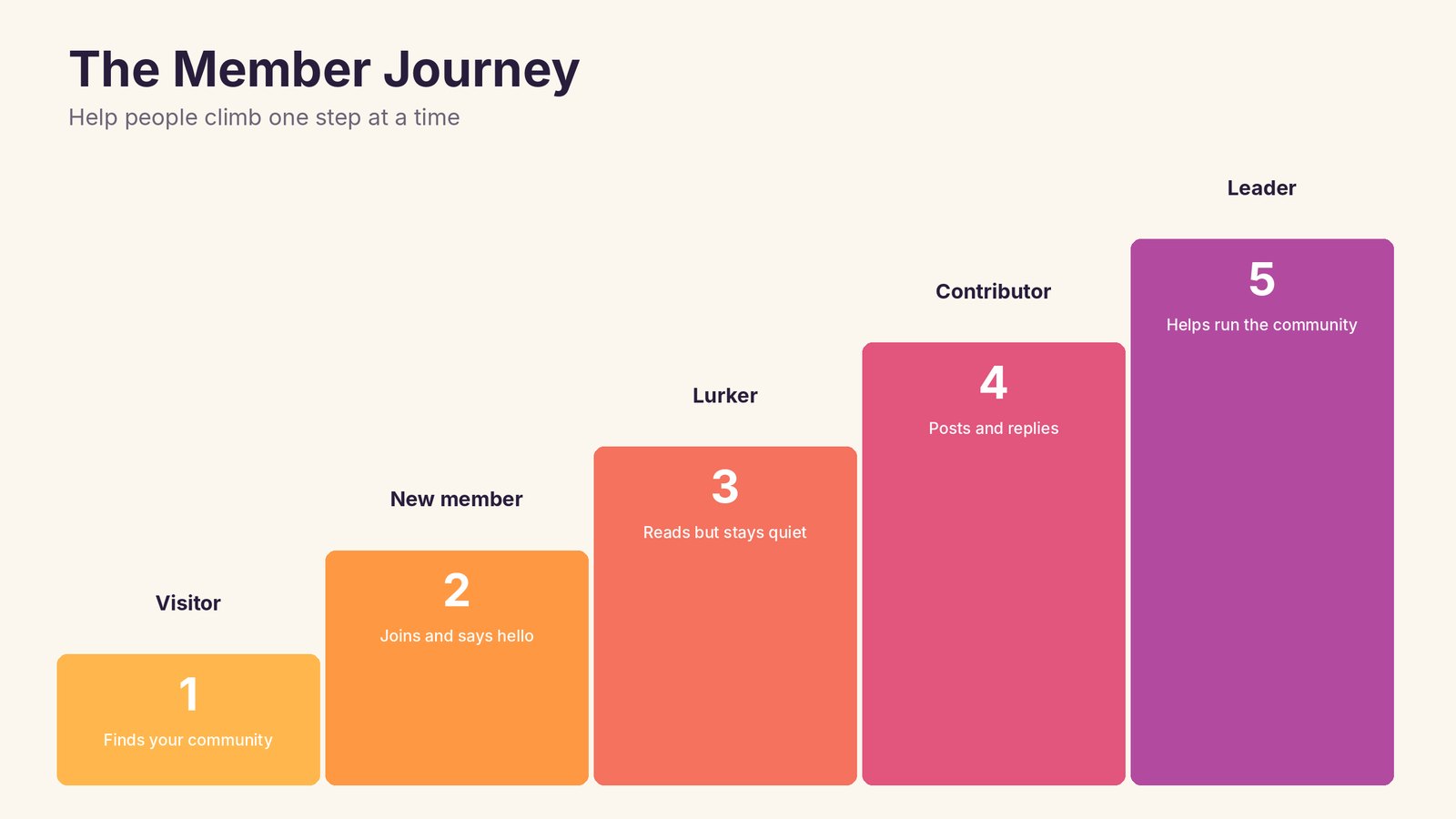
Strategies 7, 8 and 9 all work on the same idea. Members move through stages, from visitor to leader, and your job is to help them climb one step at a time.
Most people stay quiet at first, and that's normal. A gentle nudge, a direct question or a warm reply is often all it takes to turn a reader into a contributor.
8. Grow Member Leaders
Your most active members are your future moderators, hosts and ambassadors.
Why it works When trusted members share the load, the community keeps running even when you're busy, and leaders become your most loyal fans.
How to do it
- Spot members who often help others.
- Invite them to a small role, like welcoming new members or hosting a thread.
- Give them a title, early access or a private leaders' chat.
Try this Ask your top helper if they'd like to host next month's Q&A. Most people are flattered to be asked.
9. Keep Members Coming Back
People rarely leave on purpose. They just get busy and forget. Retention is about gently reminding them why they joined.
Why it works Simple check-ins and fresh reasons to return stop the slow fade that kills most communities.
How to do it
- Send a short weekly digest of the best posts and upcoming events.
- Reach out personally to members who've gone quiet for a few weeks.
- Share member wins, which remind everyone the community works.
- Ask leavers why they left and fix what you can.
Try this Once a month, message five quiet members with a personal note and a link to a post you think they'd like.
Fill the Empty Room With Cohortia
The hardest part of any new community is the empty room. Strategies take time to work, and in the meantime new members arrive to silence.
Cohortia is our AI community platform, built to solve exactly that. It gives you AI co-hosts that start discussions, ask questions and comment on member posts, so there's always something fresh to reply to, even when the group is small.
It supports the strategies in this guide too.
- Own your platform. Your community, your members and no cut of your sales.
- Content rhythm. AI co-hosts keep regular posts going between your own.
- Rewards and paid tiers. Charge for posts, events, memberships and courses.
- Reach. Communities are SEO friendly, so they can attract members from search.
- Mobile. It works like an app on members' phones.
Cohortia costs $5.58 a month, paid yearly ($67 a year), or $6.99 month to month, with no fee on your sales and a 30 day refund.
Community Trends to Watch in 2027
- AI helpers in communities. From welcoming members to summarizing long threads, AI is taking on the busywork.
- Smaller, focused groups. Niche communities with a clear purpose are beating huge general ones.
- Owned spaces over social groups. More creators are moving their audiences to platforms they control.
- Live and in person. Short live sessions and local meetups make online bonds stronger.
- Communities as a business. Paid memberships, courses and events are now a normal way to earn.
Common Community Building Mistakes
- Launching to an empty room. Invite a small founding group and seed the first conversations before you open the doors.
- Trying to please everyone. A clear purpose beats a big, vague audience.
- Doing it all yourself. Share the work early with member leaders.
- Too many channels. Start with a few spaces and add more only when they fill up.
- Measuring only member count. Active members matter far more than total members.
Frequently Asked Questions
What is the most important community building strategy?
A clear purpose. Every other strategy works better when people know exactly why the community exists and who it's for.
How do I get people to post in my community?
Ask easy, open questions, reply to every early post quickly and run simple weekly threads. AI co-hosts like those in Cohortia help keep things moving while the group is small.
How long does it take to build an active community?
Usually a few months of steady effort. Focus on your first 50 engaged members before worrying about growth.
Should I build my community on social media or my own platform?
Social media is fine for finding people, but an owned platform gives you control over reach, member data and payments.
How do I measure community health?
Look at how many members post or reply each week, how fast new posts get answered and how many new members are still active after a month.
How big should a community be before it feels alive?
Smaller than most people think. Twenty or thirty members who show up every week will feel busier than two thousand members who never post. Focus on getting a small core group talking first, then grow from there.
Should I charge for my community?
A paid community often has more engaged members, because people value what they pay for. Many owners start with a free space to build trust and add a paid tier once members ask for more depth, coaching or courses.
What do I do when the community goes quiet?
Don't panic and don't flood it with posts. Message your most active members one by one, ask what they want more of and run one simple live event. A short burst of real conversation usually brings the room back to life.
Final Thoughts
Loyal communities aren't built in a day. They're built one welcome, one conversation and one member leader at a time.
Start with a clear purpose, make the first week great and keep a steady rhythm. The rest grows from there.
And if you want a community that never feels empty, even on day one, try Cohortia for just $5.58 a month, paid yearly.